

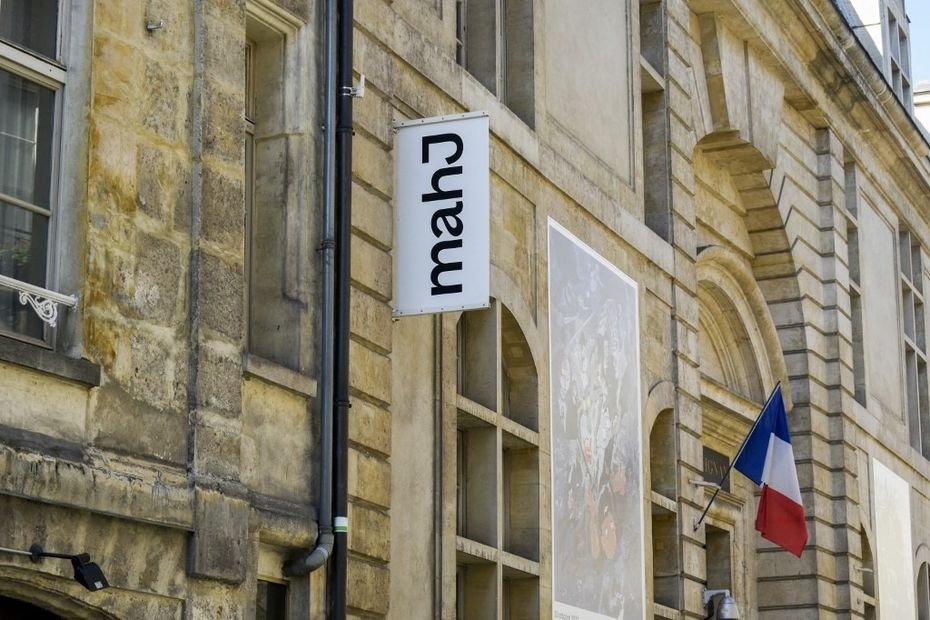
The Museum of Art and History of Judaism denounces the «boycott» of a colloquium on «the Jewish histories of Paris» after five researchers withdrew from participating. Pierre Gervais, one of the speakers who canceled his participation, explains his decision.
In a statement released on Wednesday, the Museum of Art and History of Judaism (mahJ) deplores the «boycott» of a scientific colloquium it co-organizes. Scheduled for Monday, September 15th, and Tuesday, September 16th, this event dedicated to the «Jewish histories of Paris» in the Middle Ages and the modern era was supposed to bring together 25 French and Israeli historians. However, «five French researchers recently canceled their participation, on the pretext that a research program in medieval history at the Hebrew University of Jerusalem (…) funded the participation of a doctoral student,» according to the statement.
«Some argued that their participation was equivalent to supporting the Israeli government. Others paradoxically justified their withdrawal by a motion [adopted by members of the School for Advanced Studies in the Social Sciences (EHESS), NDLR] refusing institutional partnerships while rejecting the boycott of researchers. Others simply referred to the war in Gaza to question the organization of the colloquium. Others withdrew without explicit reasons,» says the mahJ.
The multiplication of boycotts in our circles reveals a dangerous confusion
Évelyne Oliel-Grausz, co-organizer of the colloquium
The successive withdrawals of the five speakers occurred gradually after the program was released in July, explains Évelyne Oliel-Grausz, co-organizer of the colloquium, to France 3 Paris Île-de-France. «They argued that the extremely limited financial support from an Israeli university was unacceptable, even though it is customary for a laboratory to pay for a doctoral student’s plane ticket. According to us, this participation is not political and cannot be linked to the war in Gaza. Like in France, the research of Israeli colleagues is funded by the State,» argues this history professor at the University of Paris-Cité, currently on delegation at the French Research Center in Jerusalem (CRFJ), which is part of the National Center for Scientific Research (CNRS).
«This is not a partnership. And many Israeli researchers are against this war, it’s a wrongful accusation,» argues Évelyne Oliel-Grausz. «The multiplication of boycotts in our circles reveals a dangerous confusion. Israeli researchers are automatically accused of being complicit and responsible for the suffering of the war, and they are marginalized because they are Israeli,» denounces the historian, who calls for «sanctuarizing scientific and cultural collaborations.»
The statement has sparked numerous reactions in support of the museum from associations like the International League against Racism and Anti-Semitism (Licra), which condemns an «ideological spit» that «undermines the very principle of research by questioning its autonomy,» as well as the Representative Council of French Jewish Institutions (Crif), whose president Yonathan Arfi calls for «sanctions» against «a cultural hegemony of obsession and hatred towards Israel,» according to the AFP.
🚨 Five French researchers believed that participating in a symposium on the Jews in Paris, from the Middle Ages to the modern era, amounted to supporting the Israeli government.
Going against all academic traditions and attacking the very principle of… pic.twitter.com/DKOu0fG1vv
— Licra (@_LICRA_) September 11, 2025
Several elected officials have also reacted. Rachida Dati, ministre de la Culture et maire du 7e arrondissement, a déclaré que les appels au boycott répétés d’artistes, de spectacles, de conférences et de blocages d’établissements sont devenus des prétextes à un antisémitisme caractérisé et assumé.
Du côté du PS, Emmanuel Grégoire a qualifié le boycott de «honteux», tandis que Karen Taïeb, l’adjointe à la mairie de Paris en charge du patrimoine, de l’histoire et des relations avec les cultes, a exprimé son inquiétude quant à la situation.
Évelyne Oliel-Grausz a précisé qu’elle a été choquée par cette instrumentalisation politique et a rejeté les accusations d’antisémitisme. Elle a souligné le respect des choix des collègues qui se sont désistés.
Pierre Gervais, l’un des chercheurs ayant annulé sa participation au colloque, a expliqué que son retrait était dû à la présence d’institutions gouvernementales israéliennes comme partenaires, et non seulement des universités, impliquant des financements couvrant des domaines avec des applications militaires.
Le colloque aura lieu malgré les désistements, avec pour objectif d’éclairer l’histoire des juifs de France. Pierre Gervais, l’un des intervenants qui a annulé sa participation, nous explique sa démarche. Rachida Dati, ministre de la Culture et maire du 7e arrondissement, a déclaré que les appels au boycott répétés d’artistes, de spectacles, de conférences, et les blocages d’établissements deviennent des prétextes à un antisémitisme caractérisé et assumé. De son côté, Emmanuel Grégoire du PS qualifie le boycott de «honteux» tandis que Karen Taïeb, l’adjointe à la mairie de Paris en charge du patrimoine, de l’histoire et des relations avec les cultes, exprime son inquiétude en se demandant jusqu’à quand cette situation va se gangrener.
Évelyne Oliel-Grausz a été choquée par ce qu’elle qualifie d’instrumentalisation politique et rejette les mentions d’antisémitisme. Elle souligne le respect du choix des collègues qui se désistent et rappelle que le musée a décidé de ne pas divulguer les noms des chercheurs concernés.
Pierre Gervais, l’un des intervenants qui s’est retiré du colloque, craint le cyberharcèlement étant donné que les intervenants ont été rendus facilement identifiables par un article. Il explique que son retrait n’est pas lié aux frais de mission d’une doctorante, mais à l’affichage d’institutions gouvernementales israéliennes comme partenaires du colloque, ce qui a des implications politiques.
Il dénonce un mensonge délibéré du musée dans son communiqué et regrette que les organisatrices aient refusé son demande de rectificatif. De son côté, Évelyne Oliel-Grausz confirme que le colloque aura bien lieu, avec pour objectif d’éclairer l’histoire des juifs de France.
Face au désistement de cinq chercheurs d’un colloque sur «les histoires juives de Paris», le musée d’Art et d’Histoire du judaïsme dénonce ce «boycott». Pierre Gervais, l’un des intervenants ayant annulé sa participation, nous explique sa démarche. On the right, Rachida Dati (LR), Minister of Culture and Mayor of the 7th arrondissement, declares that «these repeated calls for boycotts of artists, shows, conferences, and blockades of establishments are becoming pretexts for blatant and acknowledged antisemitism.»
On the other hand, from the PS, Emmanuel Grégoire describes the boycott as «shameful,» while Karen Taïeb, the deputy mayor of Paris in charge of heritage, history, and relations with religions, wrote on X: «How long are we going to let all of this fester?»
Evelyne Oliel-Grausz specifies that she was «shocked by this political manipulation» and rejects «the mentions of antisemitism.» «We do not wish to make personal denunciations, we respect the choice of these perfectly estimable and respectable colleagues, who have every right to withdraw,» emphasizes the historian, who recalls that the museum decided not to disclose the names of the researchers concerned in the statement.
Contacted, Pierre Gervais, one of the speakers who withdrew from the symposium, fears that «cyberbullying is inevitable.» While an article from Le Point has already made the speakers easily identifiable, this professor from the department of Anglophone Studies at Sorbonne-Nouvelle University authorizes us to disclose his name to explain his actions.
«The problem was not the presence of colleagues from Israel, nor their funding, but the display of Israeli government or para-governmental institutions as partners of the symposium – and not just a university, but also the Israel Science Foundation, whose funding covers all areas, including those with military applications,» responds Pierre Gervais, who specifies that he «clearly stated» this in emails announcing his withdrawal from the event.
He denounces a «deliberate lie» from the museum in its statement. He points out that his withdrawal is not a «pretext» related to the mission expenses of a doctoral student, but is explained by «the decision to display, on the French side, the support of Israeli institutions, with all the political implications that this entails,» with the mention of the Israel Science Foundation on the symposium program in July, making Israeli participation «institutional.» «I asked for a correction from the organizers, who refused,» he regrets.
On her side, Évelyne Oliel-Grausz confirms that the symposium will indeed take place, with the «scientific approach of shedding light on the history of French Jews, many aspects of which remain opaque in the national narrative.»
SOURCE

Camille Dupont
Je suis Camille Dupont, professionnelle junior en communication digitale. Je crée et gère du contenu pour les réseaux sociaux et les médias en ligne, en combinant copywriting, narration visuelle et montage de base. Formée en communication audiovisuelle et titulaire d’un master en contenus digitaux, je suis motivée par le storytelling et par la connexion avec les jeunes audiences à travers du contenu créatif.





Deja una respuesta