During his appearance on «La Matinale» on Friday, May 15th, the geography doctor and China specialist decrypts the outcome of Donald Trump’s state visit to Beijing, particularly Xi Jinping’s blunt approach to Taiwan, a way to «return to the Chinese geostrategic matrix.»
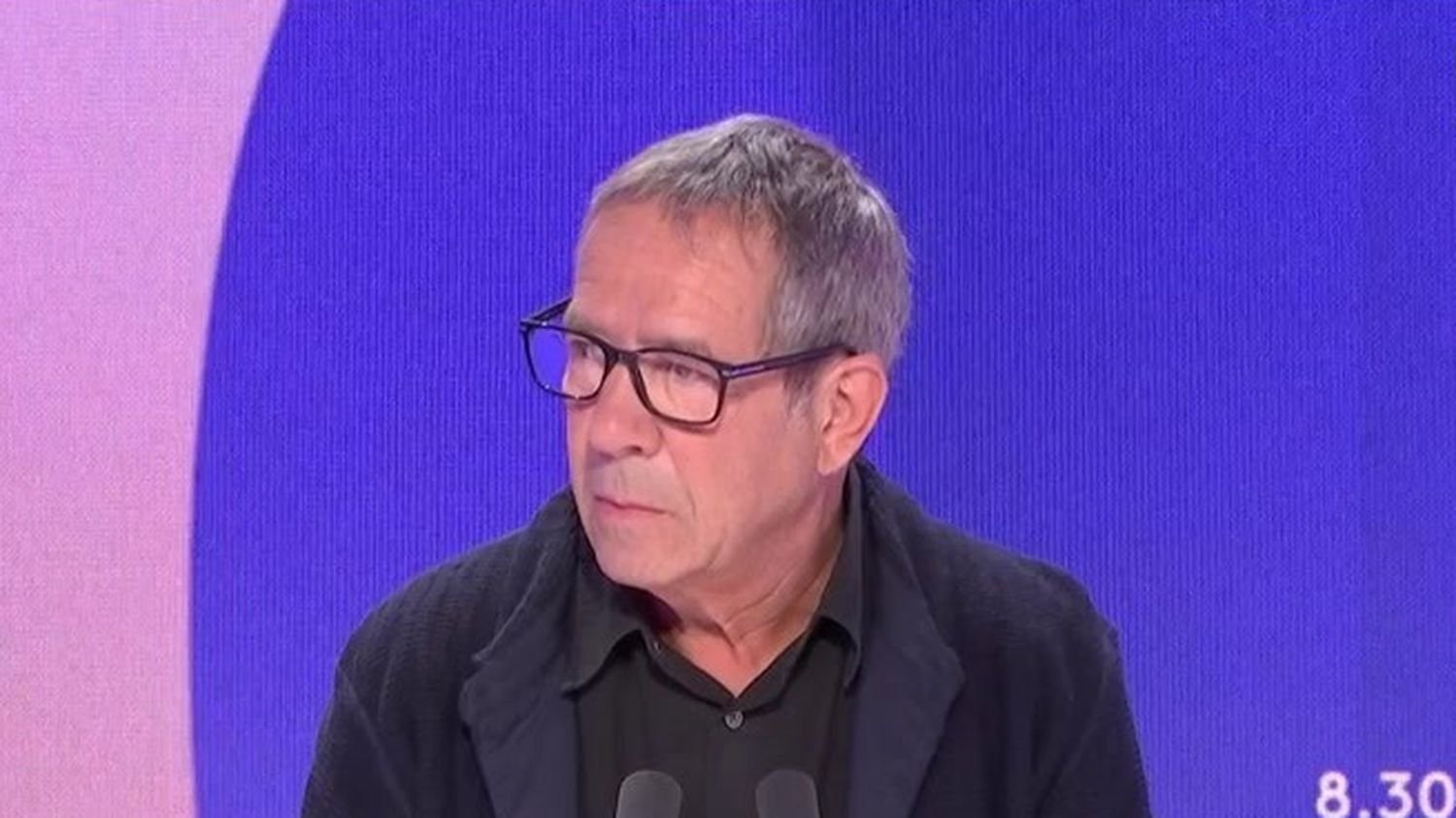
Donald Trump is preparing to board the plane on Friday, May 15th, back to Washington after his 48-hour state visit to China, and a final day of discussions with his counterpart Xi Jinping. The Chinese president claims to have secured an offer of assistance to reopen the Strait of Hormuz and the promise of a significant Boeing order. What can we conclude from this meeting? To discuss this, Emmanuel Veron, a geography doctor and specialist in contemporary China, is the guest on «La Matinale.»
Djamel Mazi: The Chinese president has offered his help to reopen the Strait of Hormuz. And this morning, we learn that despite President Xi promising, according to Donald Trump in an interview with Fox News, not to militarily support Iran and to help reopen the strait, Iran is only allowing Chinese ships to pass through. How should we interpret this?
Emmanuel Veron: This is likely a message from Tehran to Beijing, saying: we know you have the ability to exert pressure on us, so we are sending a signal by allowing a few ships of Chinese origin or with a Chinese flag to pass through. However, I believe this exercise stops there fundamentally because China does not have the means to fully resolve the situation and completely reopen the strait. At the same time, Tehran continues to demonstrate its power to disrupt and strike, which China, as I was just reading, is not fully able to contain or control.
Anthony Bellanger: From this side of Europe, we struggle to understand the kind of power China wields. We look at the United States and think that China could exert similar power. It could intervene, now possessing the world’s largest army, in the Strait of Hormuz. It could also exert a direct and powerful influence on Iran to resolve this issue. However, it does not do so because it is not in the Chinese tradition to intervene directly. Could you explain what kind of maneuvers China could make, in its diplomatic and historical tradition, to try to resolve the Strait of Hormuz issue without actually intervening?
Playing on two fronts at the same time. The first is to not completely abandon the current regime in the war against Israel and the United States. Why? To continue to weaken and saturate the United States on different military fronts. There was the one with Russia and Ukraine in Europe, there is now one in the Middle East, and we can continue to progress on potential military theaters of conflict in Asia. That is the first plan. Paradoxically, there is a second plan, which is to say that the situation is still complicated because there is a stalemate. We, the Chinese, are very dependent on the Strait of Hormuz for oil and gas imports. So, we have a fundamental problem because the artery is damaged, problematic, and blocked. We need these products. Also, there is an issue of image with the Gulf monarchies. Even though China had strengthened ties with Iran, all Arab-Muslim countries, especially the Gulf monarchies with whom China has very strong economic, oil, and arms ties, were quite skeptical of this rapprochement or link with Iran. So, there is a discreet subject, at least in China’s indirect willingness, to try to improve its image while having the opportunity to spread a degraded image of the United States, being warmongers, etc.
The question that arises in light of these 48 hours of Donald Trump’s travel, I think many people are asking themselves, is: why did the Chinese bring up Taiwan at the beginning of the meeting? Taiwan, which is the ultimate sensitive issue, and they did it with a lot of force? I devoted a column to this this morning, I would like to hear your thoughts on the matter.
You are absolutely right to mention Taiwan because it was the subject placed in the middle of the table right away in the discussions and on parts of the agendas, which, by the way, are not quite the same between Chinese and American publications. So, why Taiwan? Well, because it is a return, and it is somewhat related to the question you asked me earlier, to the Chinese geostrategic matrix, which prioritizes Asia first. Taiwan is in Asia, on China’s doorstep, and from the perspective of the Chinese Communist Party, Taiwan is a Chinese province, of course, all with a conditional clause. The reality is quite different. For China, bringing up Taiwan is like a thorn in the side, even more so for the American administration. It is, to quote Nikki Haley from the Republican Party, a logic of interference in American diplomacy and foreign policy in Asia.
Click on the video to watch the full interview.
Guest on «La Matinale» this Friday, May 15, the PhD in geography and specialist in China decrypts the outcome of Donald Trump’s state visit to Beijing, notably Xi Jinping’s frontal approach to Taiwan, a way to «return to the Chinese geostrategic matrix.»
Donald Trump is preparing to board the plane this Friday, May 15, back to Washington after his 48-hour state visit to China, and a final day of discussions with his counterpart Xi Jinping. The Chinese president claims to have secured an offer of assistance to reopen the Strait of Hormuz and a promise of a significant Boeing order. What assessment can be made of this meeting? To discuss this, Emmanuel Veron, a PhD in geography and specialist in contemporary China, is the guest on «La Matinale».
This text corresponds to a part of the transcript of the interview above. Click on the video to watch it in full.
Djamel Mazi: The Chinese president has offered his help to obtain the reopening of the Strait of Hormuz. And we learn this morning, although the Chinese president has promised, according to Donald Trump to our colleagues at Fox News, not to militarily support Iran and to be able to help reopen the strait, that Iran allows only Chinese ships to pass. How to interpret this?
Emmanuel Veron: It is probably a message from the power in Tehran to Beijing saying: we know that you have the ability to exert pressure on us, so we are sending you a signal by allowing a few ships of Chinese origin or with a Chinese flag to pass. But I believe that the exercise stops there fundamentally because China does not have the means to completely resolve the situation, to fully reopen the strait. At the same time, Tehran continues to show that it has the power to disrupt and strike, which China, as I was reading just now, is not completely able to control or manage.
Anthony Bellanger: From this side of Europe, we have difficulty understanding the kind of power that China wields. We look at the United States and think that China could exert the same type of power. It could intervene, now having the world’s largest army, in the Strait of Hormuz. It could also exert direct and powerful influence on Iran to resolve this issue. However, it does not do so because it is not in the Chinese tradition to intervene directly. Could you explain to us what kind of maneuvers China could make, in its diplomatic and historical tradition, to try to resolve the issue of the Strait of Hormuz without actually intervening?
Playing on two fronts at the same time. The first, not completely abandoning the current regime in the war against Israel and the United States. Why? To continue weakening and saturating the United States on different military fronts. There was one with Russia and Ukraine in Europe, there is now one in the Middle East, and we can continue to progress on potential military theaters of conflict in Asia. That’s a first plan. And paradoxically, there is a second plan, which is to say that the situation is still complicated because there is a stalemate. We, Chinese, are very dependent on the Strait of Hormuz for oil and gas imports. And so, we have a fundamental problem there because the artery is damaged, problematic, and blocked. And so, we need those products. And also, there is an issue of image with the Gulf monarchies. Even as China had strengthened its ties with Iran, all the Arab-Muslim countries, especially the Gulf monarchies, with which China has very, very strong economic, oil, and armament ties, were quite skeptical of this rapprochement or link with Iran. So there we have a subject that is all discreet, at least in China’s indirect will, to try to improve its image while having the possibility to spread a degraded image of the United States, as being bellicose, etc.
The question I ask myself in light of these 48 hours of Donald Trump’s travel, I think many people are asking themselves, is: why did the Chinese bring up Taiwan at the beginning of the meeting? Taiwan, which is the ultimate sensitive issue, and they did it with a lot of violence? I dedicated a column to it this morning, I would like to hear your thoughts on the subject.
You are absolutely right to mention Taiwan, as it was the subject put on the table right at the beginning of the discussions and in part of the agendas, which, by the way, are not exactly the same between Chinese and American publications. So why Taiwan? Well, because it is a return, and it is somewhat related to the question you asked me earlier, to the Chinese geostrategic matrix, which is first and foremost in Asia. Taiwan is in Asia, at the gates of China, and from the perspective of the Chinese Communist Party, Taiwan would be a Chinese province, obviously, all with a conditional. The reality is quite different. For China, bringing up Taiwan at the table is like a thorn in the side, even more, for the American administration. L’importance de Taïwan pour la Chine est donc primordiale en termes de géostratégie et de politique étrangère. C’est pourquoi Xi Jinping a abordé frontalement cette question dès le début de la rencontre avec Donald Trump. Cette démarche est interprétée comme un rappel de la souveraineté chinoise sur Taïwan et une manière de réaffirmer les priorités géopolitiques de la Chine en Asie.
En ce qui concerne la proposition d’aide de la Chine pour rouvrir le détroit d’Ormuz, il s’agit plus d’un signal politique envoyé à l’Iran et aux autres acteurs de la région qu’une véritable solution concrète. La Chine ne dispose pas des moyens militaires ni de l’influence directe nécessaire pour résoudre cette situation complexe. Elle préfère jouer un rôle plus discret et subtil, en essayant de maintenir un équilibre entre ses intérêts économiques, géopolitiques et diplomatiques.
Par ailleurs, la Chine cherche également à soigner son image auprès des monarchies du Golfe, avec lesquelles elle entretient des relations économiques et énergétiques importantes. En démontrant sa capacité à jouer un rôle de médiateur dans la région, la Chine cherche à renforcer sa position sur la scène internationale et à contrer l’influence des États-Unis.
En conclusion, la visite de Donald Trump en Chine et les discussions avec Xi Jinping ont mis en lumière les enjeux géopolitiques majeurs en Asie, notamment en ce qui concerne Taïwan et le détroit d’Ormuz. La Chine continue de jouer un rôle complexe et subtil dans la région, cherchant à protéger ses intérêts tout en maintenant des relations diplomatiques équilibrées avec les acteurs régionaux et mondiaux. La Chine considère que placer Taïwan au centre de la table est une source de friction pour l’administration américaine. Selon Nikki Haley du parti républicain, cela équivaut à une ingérence dans la diplomatie et la politique étrangère américaine en Asie. Cliquez sur la vidéo pour regarder l’interview complète.
SOURCE














Deja una respuesta